Hula-Hula Preview Image
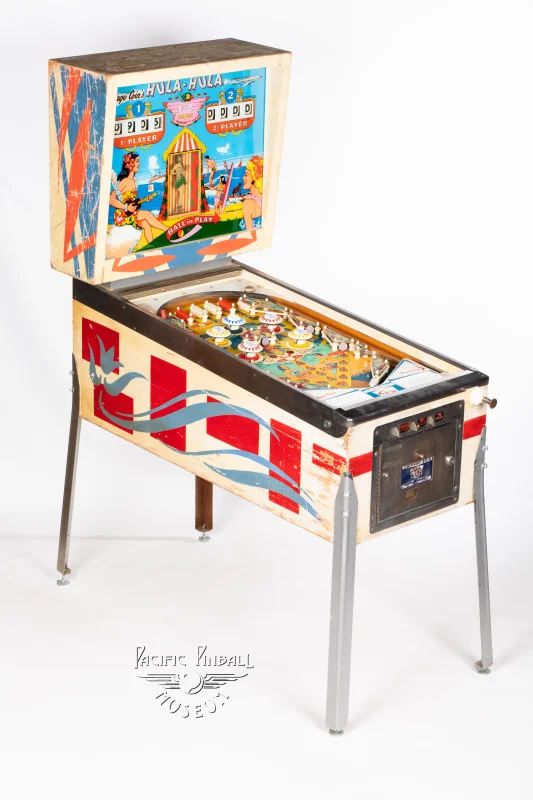
Machine Description
Content Under Review
Help us improve this content
Your support accelerates our content verification efforts.
Support Our WorkThe Hula-Hula pinball machine, released by D. Gottlieb & Co. in the late 1960s, exemplified the vibrant and playful aesthetic of its era while capitalizing on the enduring American fascination with Polynesian and Hawaiian culture that peaked in the 1950s and '60s. During this period, tiki bars, luaus, and Hawaiian-themed entertainment were extremely popular in mainland United States, making the theme a natural choice for a pinball machine.
The machine's design likely featured bright, tropical artwork with hula dancers, palm trees, and island motifs characteristic of the period's interpretation of Hawaiian culture. As an electro-mechanical pinball machine, it would have utilized the classic mechanical scoring reels, chimes, and bells that created the distinctive soundtrack of arcade gaming in that era. The playfield would have included standard features of the time such as pop bumpers, kick-out holes, and various scoring targets.
While specific production numbers are not readily available, Hula-Hula represents an important piece of both pinball and American pop culture history. It was manufactured during what many consider the golden age of electro-mechanical pinball, when these machines were fixtures in bars, bowling alleys, and arcades across America. The theme and timing of its release perfectly captured the mainstream American entertainment industry's romanticized vision of Hawaiian culture, which had been building since Hawaii achieved statehood in 1959.