King Tut Preview Image
Machine Description
Content Under Review
Help us improve this content
Your support accelerates our content verification efforts.
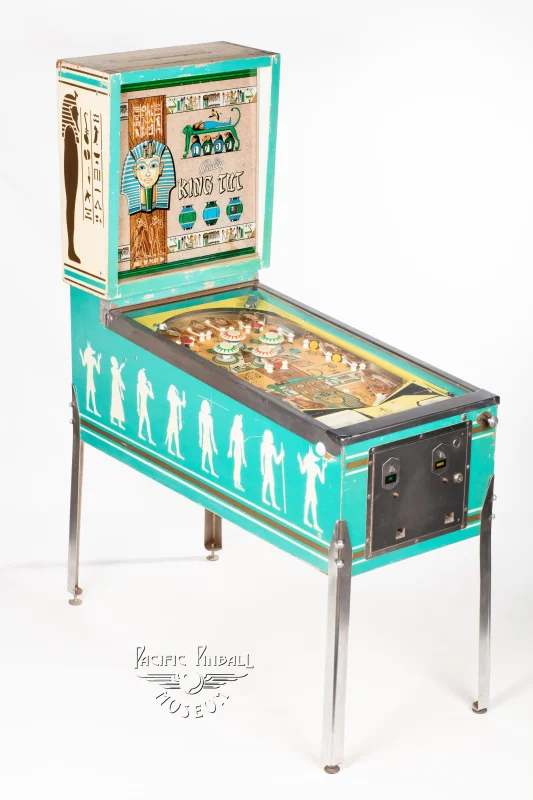
Support Our WorkKing Tut, released by D. Gottlieb & Co. in 1980, capitalized on the enduring public fascination with ancient Egyptian culture and particularly the legacy of Tutankhamun. The timing of this machine followed the highly successful Treasures of Tutankhamun museum exhibition that toured the United States in the late 1970s, making it a culturally relevant theme for the era.
The machine featured elaborate Egyptian-themed artwork, including hieroglyphics, pyramids, and the iconic death mask of Tutankhamun. As a solid-state pinball machine from the early 1980s, it represented the transition period when manufacturers were exploring the capabilities of electronic scoring and sound effects while maintaining traditional electro-mechanical gameplay elements. The playfield design likely included multiple drop targets, pop bumpers, and traditional flippers, arranged to create shot combinations themed around exploring an ancient tomb.
While not one of Gottlieb's most famous titles from this era, King Tut represents an important piece of pinball history as it demonstrates how manufacturers incorporated popular cultural phenomena into their games. The theme choice shows the industry's growing sophistication in marketing and theme selection, moving beyond generic concepts to specific historical and cultural references that would resonate with players.
The game would have featured early solid-state sound effects and basic electronic displays, typical of its era. Production numbers are not definitively known, but like many Gottlieb machines of this period, it was likely produced in moderate quantities for distribution to arcades, bars, and other entertainment venues across North America and Europe.