Lady Robin Hood Preview Image
Machine Description
Content Under Review
Help us improve this content
Your support accelerates our content verification efforts.
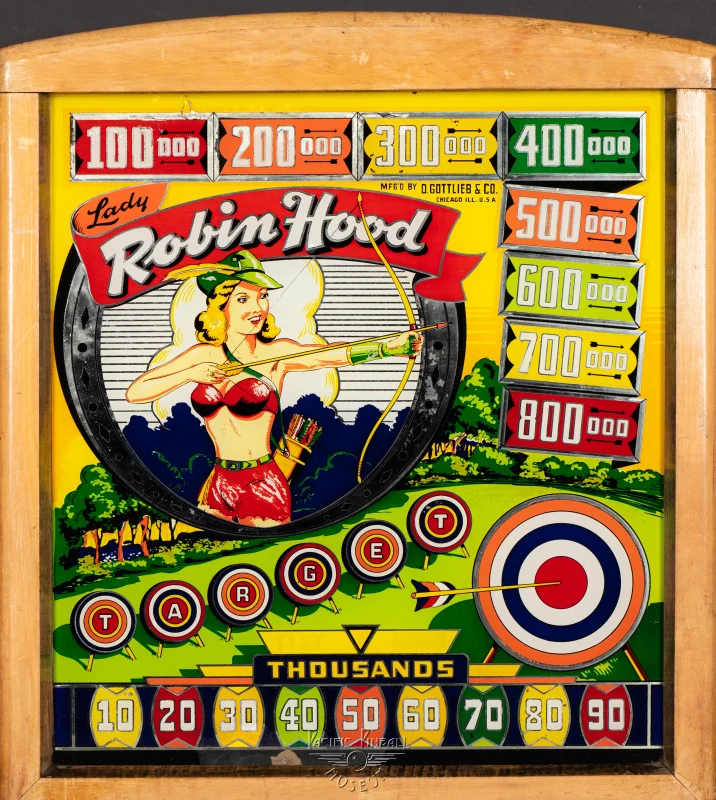
Support Our WorkLady Robin Hood, released by D. Gottlieb & Co. in 1948, represents a classic example of early post-war pinball design and demonstrates the growing sophistication of pinball themes during this pivotal era. The machine cleverly adapted the legendary Robin Hood tale with a feminine twist, reflecting changing social dynamics in post-WWII America when women had taken on expanded roles in society.
The machine featured vibrant artwork depicting a female archer in Lincoln green, maintaining the medieval forest theme of the Robin Hood legend while breaking new ground with its gender-swapped protagonist. As an electro-mechanical pinball machine, it utilized the reliable mechanical systems of the era, including scoring drums, bells, and chimes that would become hallmarks of the golden age of mechanical pinball. The playfield layout included standard features of the period such as pop bumpers, kick-out holes, and rollover switches.
Lady Robin Hood holds historical significance as one of the earlier examples of pinball machines featuring a female protagonist, predating the more common practice of female-centered themes that would emerge in later decades. The machine's production numbers, while not precisely documented, are believed to be in line with other Gottlieb machines of the late 1940s, typically ranging between 1,000 to 2,500 units. Today, Lady Robin Hood is considered a collectible piece, particularly valued for its unique theme and historical placement in pinball's evolution from simple bagatelle games to more complex narrative-driven experiences.