Lite-a-card Preview Image
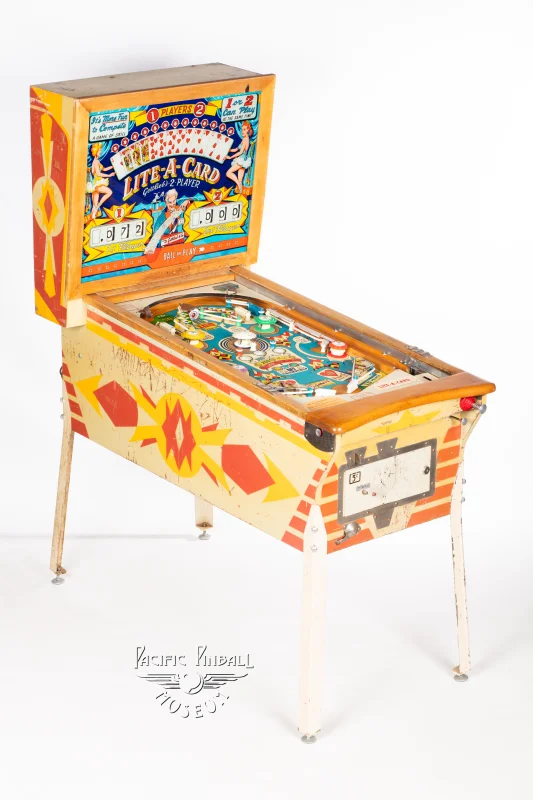
Machine Description
Content Under Review
Help us improve this content
Your support accelerates our content verification efforts.
Support Our WorkGottlieb's 'Lite-a-card' from 1959 represents a classic example of late 1950s electro-mechanical pinball design, emerging during a period when pinball manufacturers were experimenting with new scoring mechanisms and player engagement features. The machine's name suggests its primary gameplay mechanic: lighting up various card-themed targets or inserts on the playfield.
The gameplay likely centered around poker or card-game themed objectives, a popular motif in pinball machines of this era. Players would attempt to complete card combinations by hitting specific targets, with lights indicating progress. This style of incremental goal completion was innovative for its time and helped establish patterns that would influence pinball design for decades to come.
As an electro-mechanical machine, Lite-a-card operated entirely through a system of relays, switches, and stepper units, without any electronic displays or solid-state components. The scoring would have been displayed using mechanical reels, and the playfield illumination would have been controlled through a complex network of mechanical switches and relays. While production numbers aren't definitively known, machines from this era typically saw production runs of 1,000 to 3,000 units.