Lucky Seven Preview Image
Machine Description
Content Under Review
Help us improve this content
Your support accelerates our content verification efforts.
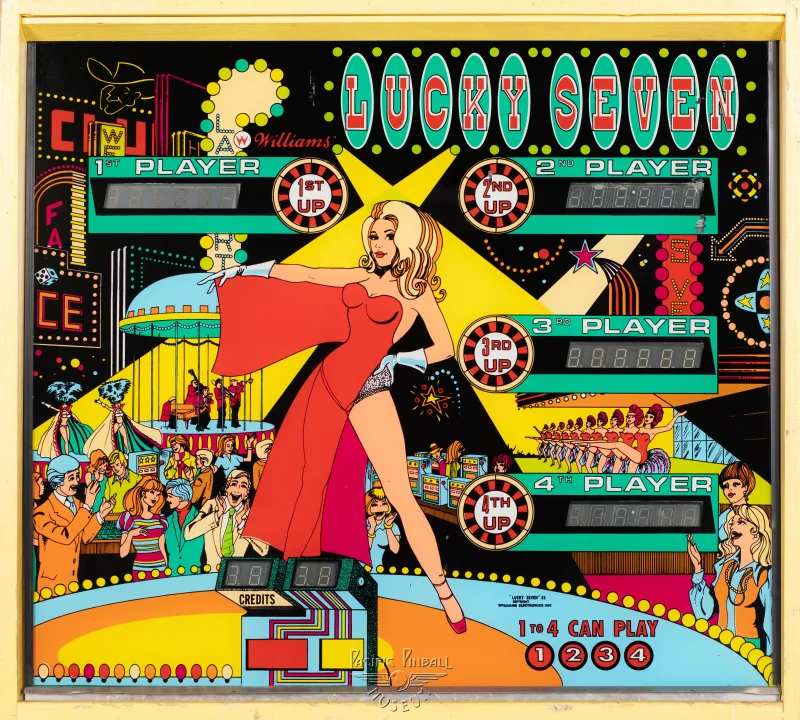
Support Our WorkLucky Seven, released by D. Gottlieb & Co. in the mid-1970s, represents a classic example of electro-mechanical pinball design during the golden age of pinball. The machine embraced the popularity of gambling-themed games of the era, incorporating lucky number seven imagery and traditional card suit symbols into its playfield art and scoring objectives.
The game featured a relatively straightforward playfield layout typical of the period, with pop bumpers, drop targets, and rollover lanes. The scoring system was built around achieving combinations of sevens, with players attempting to complete various number sequences to maximize their points. The machine utilized the reliable electro-mechanical technology of the era, with scores displayed on rotating mechanical reels and game actions controlled by relay switches and stepper units.
Lucky Seven emerged during a significant period in pinball history, just before the industry's transition to solid-state electronics. The game's simple but engaging ruleset and reliable mechanical components made it a popular choice for operators looking for dependable earnings from their locations. While not necessarily groundbreaking in terms of innovative features, Lucky Seven represented the mature stage of electro-mechanical pinball design, offering players a well-refined gaming experience.