Melody Lane Preview Image
Machine Description
Content Under Review
Help us improve this content
Your support accelerates our content verification efforts.
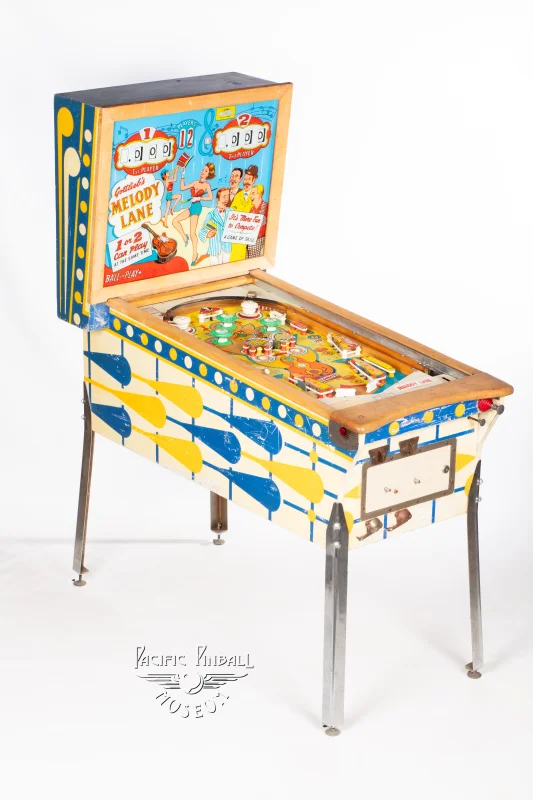
Support Our WorkMelody Lane, released by D. Gottlieb & Co. in the late 1940s, represents a classic example of the early post-war era of pinball design when manufacturers were focusing on musical and entertainment themes to appeal to the booming leisure market. The machine epitomized the aesthetic sensibilities of the period with its musical motif and art deco-influenced cabinet artwork.
The gameplay of Melody Lane was characteristic of its era, featuring a simpler playfield design compared to modern machines, with the focus on hitting specific targets and bumpers to achieve high scores. The machine likely incorporated the standard mechanical features of the time, including kick-out holes, pop bumpers, and possibly a musical chime unit that would play notes when certain targets were hit, though exact gameplay details are not extensively documented.
As an electro-mechanical pinball machine from the golden age of mechanical pinball, Melody Lane would have utilized relay-based score keeping and feature activation. The machine's scoring would have been displayed through mechanical number wheels, and all game operations would have been controlled through a complex system of relays, switches, and solenoids - technology that defined pinball manufacturing for decades.
While not one of Gottlieb's most famous titles, Melody Lane represents an important piece of pinball history, showcasing the transition period between the simpler pre-war machines and the more complex games that would emerge in the 1950s. The musical theme was part of a broader trend in post-war American entertainment that celebrated popular music and dance culture.