Merry Widow Preview Image
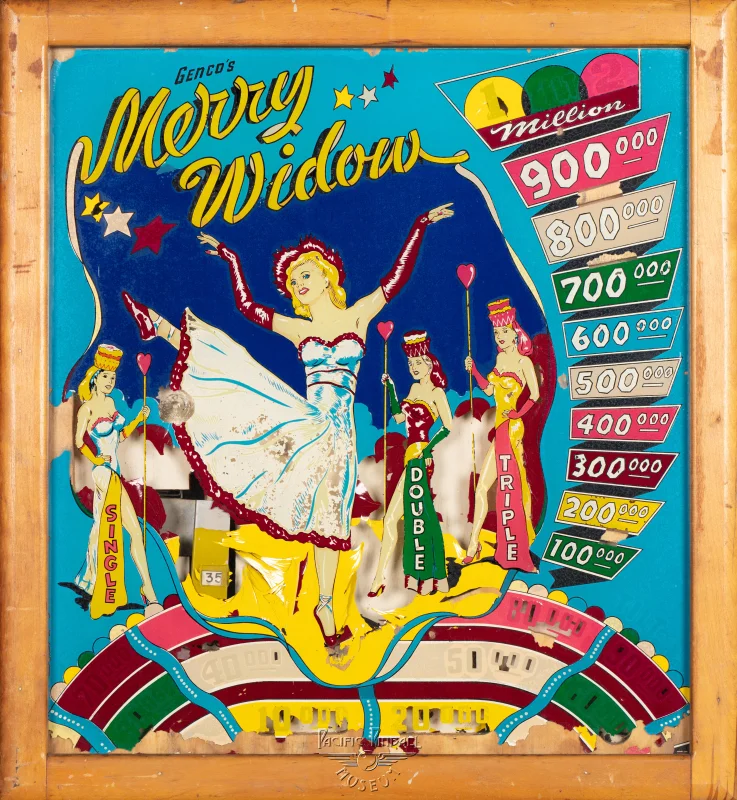
Machine Description
Content Under Review
Help us improve this content
Your support accelerates our content verification efforts.
Support Our WorkThe Merry Widow pinball machine, released by D. Gottlieb & Co. in 1967, represents a classic example of electro-mechanical pinball design during the golden age of mechanical pinball machines. The theme was likely inspired by the popular Franz Lehár operetta of the same name, reflecting the era's tendency to incorporate cultural references into pinball designs.
The machine featured the characteristic artwork and styling of the late 1960s Gottlieb games, with a playfield designed to provide engaging gameplay through traditional mechanical elements such as pop bumpers, kick-out holes, and scoring targets. Like other electro-mechanical machines of its time, it utilized relay-based scoring and chime units to create the distinctive sounds that characterized pinball games of this era.
As a product of the pre-digital age, the Merry Widow employed the reliable mechanical components and systems that made Gottlieb machines famous for their durability and consistent performance. The game would have featured the standard score reels and mechanical ball count units typical of this period, along with the satisfying mechanical feedback that players came to expect from games of this vintage.
While not one of Gottlieb's most famous titles, the Merry Widow represents an important piece of pinball history, showcasing the engineering and design principles that defined mechanical pinball manufacturing in the 1960s. The machine serves as a testament to the craftsmanship and innovation of the electro-mechanical era, before the industry's transition to solid-state electronics in the late 1970s.