Playboy Preview Image
Machine Description
Content Under Review
Help us improve this content
Your support accelerates our content verification efforts.
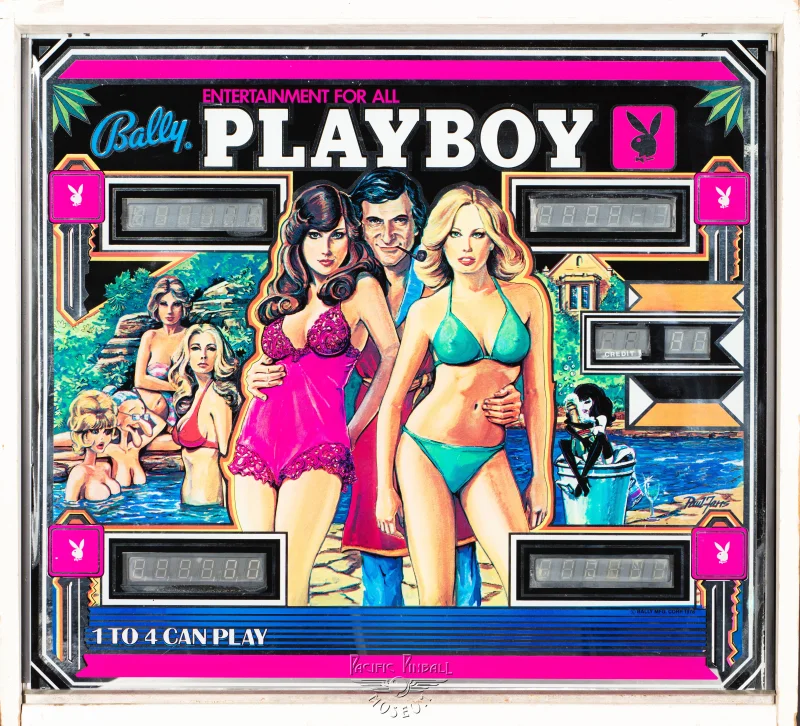
Support Our WorkThe Playboy pinball machine, released by Bally in 1978, represents a significant milestone in pinball history as one of the most successful licensed theme machines of its era. This game capitalized on the immense cultural influence of Hugh Hefner's Playboy empire during the late 1970s, featuring artwork and imagery from the famous magazine while maintaining a relatively tasteful presentation suitable for public venues.
Technologically, Playboy marked an important transition period as one of Bally's early solid-state machines, featuring electronic scoring and sound effects rather than the electro-mechanical systems of earlier decades. The playfield design by Jim Patla included innovative features like multiple pop bumpers, drop targets, and a unique center playfield feature that revealed different Playboy Bunny images. The machine's artwork was created by Paul Faris, incorporating the iconic Playboy bunny logo and magazine imagery.
The game proved to be one of Bally's best-selling titles of 1978, with approximately 18,250 units produced. Its success helped establish licensed themes as a viable strategy for pinball manufacturers, paving the way for countless future collaborations between pinball makers and entertainment properties. Today, Playboy pinball machines are highly sought after by collectors, both for their historical significance and as representatives of the early solid-state era of pinball design.
The game's enduring popularity has made it a valuable piece of both pinball and pop culture history, representing the intersection of adult-oriented entertainment and mainstream amusement devices during a pivotal period of social change in the late 1970s. Its success influenced future pinball designs and demonstrated the potential for brand licensing in the amusement industry.