Satin Doll Preview Image
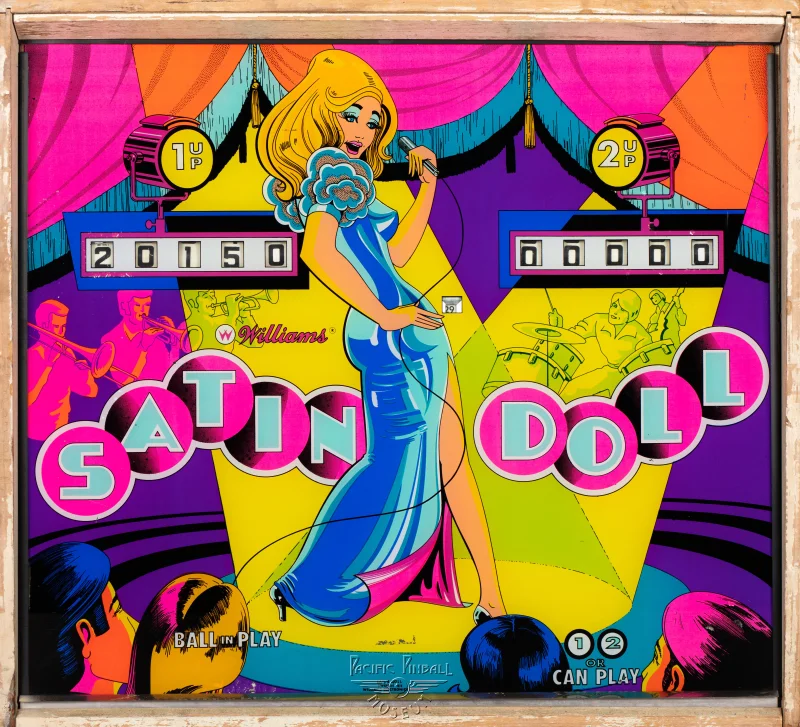
Machine Description
Content Under Review
Help us improve this content
Your support accelerates our content verification efforts.
Support Our WorkSatin Doll, released by D. Gottlieb & Co. in 1973, represents a classic example of early 1970s electro-mechanical pinball design. The machine's name likely drew inspiration from the famous Duke Ellington jazz standard 'Satin Doll,' reflecting the era's continuing influence of jazz culture on popular entertainment.
The machine featured the characteristic artwork and styling of the early 1970s period, with elegant feminine motifs typical of the era's pinball aesthetic. As an electro-mechanical machine, it utilized relay-based scoring and chime units to create its distinctive sounds and gameplay experience. The playfield likely included standard features of the period such as pop bumpers, drop targets, and shooting lanes, though specific details of the layout are not well documented.
While not one of Gottlieb's most famous titles, Satin Doll represents an important transition period in pinball history, released during the final years of the electro-mechanical era, just before the industry's shift to solid-state electronics. The machine embodies the craftsmanship and mechanical ingenuity that characterized the golden age of electro-mechanical pinball, when these devices were still entirely analog in their operation.
Production numbers for Satin Doll are not definitively known, as was common for machines from this era. However, it would have been manufactured at Gottlieb's Chicago facility, where the company produced the majority of its games during this period. The machine serves as a testament to the artistry and engineering of classic pinball design, bridging the gap between the simple games of the 1960s and the more complex solid-state machines that would follow later in the decade.