Shangri-La Preview Image
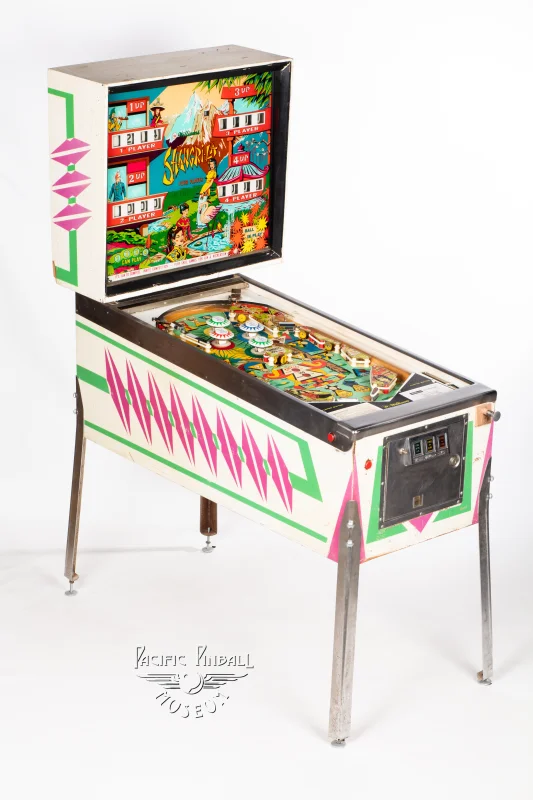
Machine Description
Content Under Review
Help us improve this content
Your support accelerates our content verification efforts.
Support Our WorkShangri-La, released by D. Gottlieb & Co. in 1967, represents a classic example of electro-mechanical pinball design during the golden age of pinball. The machine's theme was inspired by the mythical paradise of Shangri-La from James Hilton's 1933 novel 'Lost Horizon,' capturing the exotic mysticism and allure of the Far East that was popular in American culture during the 1960s.
The playfield featured a distinctive Asian-inspired art package with pagodas, mountains, and traditional Oriental motifs. As an electro-mechanical machine, it utilized relay-based scoring and chimes rather than electronic sounds. The gameplay emphasized traditional pinball elements including pop bumpers, kick-out holes, and spinning targets, arranged in a layout that was both challenging and engaging for players of the era.
Shangri-La was produced during a significant period in pinball history, when manufacturers were creating increasingly sophisticated electro-mechanical games before the transition to solid-state electronics. While not as well-known as some other games of its era, it represents an important piece of pinball history that bridges the classic and modern eras of game design.