Sweet Sioux Preview Image
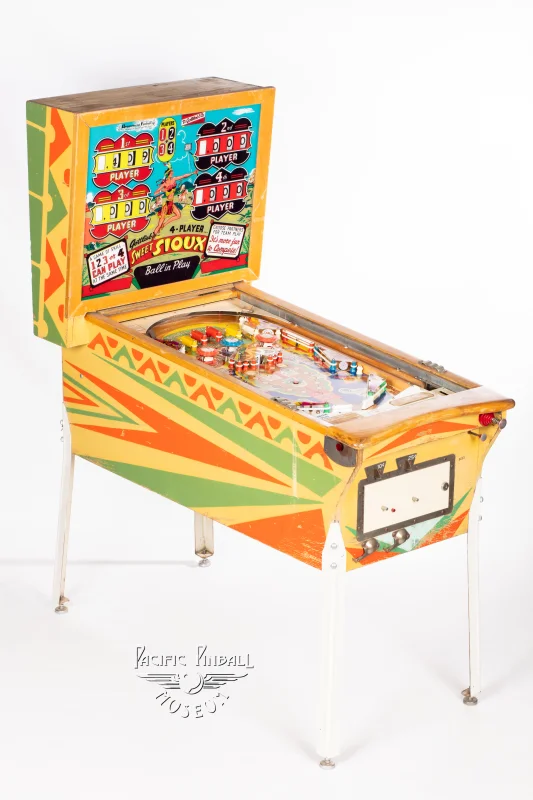
Machine Description
Content Under Review
Help us improve this content
Your support accelerates our content verification efforts.
Support Our WorkSweet Sioux, released by D. Gottlieb & Co. in 1969, represents a classic example of late 1960s electro-mechanical pinball design during a period when Native American themes were popular in American entertainment media. The machine emerged during an era when pinball manufacturers were pushing the boundaries of mechanical innovation while still working within the constraints of pre-electronic technology.
The machine's artwork and theme drew from romanticized Wild West imagery popular during this period, featuring Native American motifs and frontier scenes typical of the era's cultural perspective. While such depictions would be considered problematic by today's standards, they reflect the historical context of late 1960s popular entertainment. The playfield likely featured tepees, arrows, and other thematic elements common to machines of this genre.
As an electro-mechanical machine, Sweet Sioux operated entirely through a system of relays, switches, and solenoids, with score recording handled by mechanical reels. The game would have featured the satisfying mechanical sounds and tactile feedback characteristic of EM-era machines, including the distinctive clicking of score reels and chiming of bells. While specific production numbers are not widely documented, machines from this era typically saw production runs of several thousand units.
Sweet Sioux holds historical significance as one of the last waves of purely electro-mechanical pinball machines before the industry's transition to solid-state electronics in the late 1970s. It represents a technological snapshot of pinball engineering at its mechanical peak, just before the digital revolution would transform the industry.